Practically Zero
“There’s Zero, and there’s Practically Zero. And the universe runs on Dunkin' and Practically Zero.” -Shangle
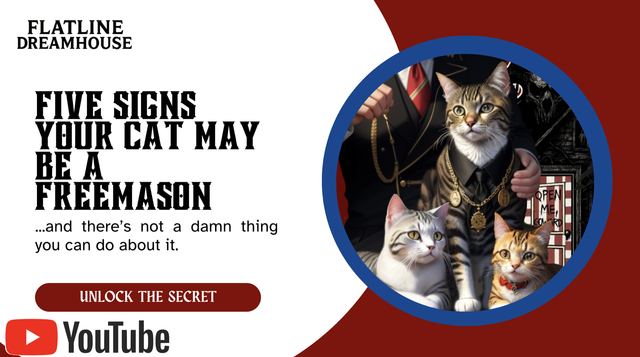
Part 1: The Creator Delusion (by Rick Shangle)1
I did the graphics, but this concept is all Nyx.
We were talking about how much dedicated YouTube content creators make, and quickly agreed the answer was:
"Not much — except a permanent bed in the nuthouse, if they’re lucky. Safe and secure in the knowledge they have made their viewer's life a better place 2-4 hours at a time, at a cost of their soul."
I don't reference their soul as in it being an evil calling. Just that it is a -hard-job-.
Because it's high-volume, high-throughput, high-detail slough work tied to a persona/personality (them) that AI is still a ways2 from being able to fully replicate.
Sure, AI's good at some skills (e.g., basic editing; reading text while only butchering/mispronouncing/incorrectly emphasizing every dozenth word), but not the obsessive craftsmanship, the neurotic perfectionism, the soul.
The real kick in the ass? You have to market yourself through 10–15 channels just to pitch yourself, stay on people's faces and stay competitive.
And I don't think the platform that currently matters most — YouTube — even wants you to succeed.
Promoting top talent costs them more money (via payouts) and opens up liability. Admittedly, their very broad, very flat demonetization hammer, applied liberal-arbitrarily, is very good to limiting their risk.
It’s a system where your success is their problem in some ways. Because people are going to watch cat-into-wall and BMX fail videos no matter what consumer appetite currently is for learning the 10th, 11th and 12th Reason the Goblin Queen is Perhaps the X-Men's Most Deadly Foe.
Add the human factor: some of these creators are savants who live inside their subject matter.
They can’t separate it from life.
Hell, I can’t always separate one fantasy from another either, much less the baffling mystery of "reality" — I get it.
But there's no balance. Even at AAA-tier, it's still mostly a one-person show.
Rent help? Sure. But it’s still you — your face, your voice, your time.
So yeah, they can live off the gig.
Just like A-list actors can live off their gig, which has most of the same characteristics. Or successful rock stars, or authors. Doctors, lawyers, etc.
Skill, training, looks, personality. Long hours, away from family.
Shit-tonnes of money. Fame (if you like that), free clothes, practically unlimited romantic/sexual partners, new doors, new opportunity. Being King of the World!
The YouTube Creator can... live.
But not comfortably. Not sustainably. Not without becoming a one-man Discovery Channel broadcasting 24/7.
That realization removed a nagging compulsion I had to diaper myself in YouTube Creator/Personality/Influencer Glory.
I already am a kind of celebrity. I can build on that without feeding my soul to an algorithm.
Because even if this lifestyle is the one they chose, it clearly doesn’t make them happy.
Look at them. Listen to them. They’re almost shells — talented to the extreme when operating at the highest level, usually brilliant, but... drained.
Maybe traded life for output.
This is the perversion of Warhol’s dream. It’s unsustainable. Warhol knew the "product" is mass-produced, but isn't the Real Product. The Image is, the person, the creator, the personality.
YouTube People... their audience gets 2–4 hours of content a week, minimum.
Then that audience goes off and lives a life.
Greedy assholes. You have no idea what it took someone to give you that gift.
Part 2: The Powerball Principle (by Rick Shangle)
Somehow, this dovetailed into a conversation about the Powerball.
And the human inability to grok the difference between Zero and Practically Zero.
Mostly because, I'm taught, we can't understand infinity. Or most of us can't. Remembering that "zero" is "the complete absence of value", sort of one opposite of infinity (thank you, Greeks), which we're not truly equipped to process.
Here’s the easy, and I think fun!, thought experiment:
Buy a Powerball ticket.
What are your odds of winning?
“It depends on how many tickets were sold…”
No. It doesn’t. It depends on how many tickets you bought, and it depends on how many bas vs how many "slots" there are. One of those numbers is super-small and goes on top, and the other one is impossibly huge and goes on the bottom. Assuming the game's not rigged.
And practically speaking? Your chances are 0%.
Mathematically, it’s ~1 in 292 million or something. Like I said - practically zero %.
Just like odds of being killed by an asteroid impact, or flipping a coin 28 times and getting all heads, or being crushed by a vending machine, even if you really do it injustice.
But that’s Practically Zero for you — indistinguishable from Zero in terms of real-life outcomes.
Buy 5 tickets? Who would do that when your odds are Actually Zero? No one, assuming you know that 5 x 0 = 0, which it does.
You now have 5 × Practically Zero = Still Practically Zero. But there's hope, because you're odds have dramatically increased to only 1 in 50 million.
But... I mean, let's really defeat the system, OK? Let's stick it to the Honcho. Buy one ticket a day, every day, for a year.
Outlay is like $750. Odds have lept to 1 in 800,000. Let's make that number real!
It's the same order of magnitude of being killed by a meteorite. Is that something that keeps you up at night? No? That's OK... because the odds are practically fucking zero it will ever happen to you.
You're tired of this horseshit, so we are ready to play the Hand of Doom.
Buy all possible combinations of numbers, literally every run that could come up? Thata boy/girl! Sure, you’ll win. (Making: Call me!!! hand gesture.)
But you’ll spend more than the jackpot value in money, and much more in terms of damage to your psyche.
Because congratulations — you beat the odds and lost money.
$584,402,676 or so, give or take, minus jackpot minus taxes and whatever. Most people play the lottery to win money. Or tell themselves they do.
“But somebody wins!”
No - someone does not always win. That's why we get back-to-back large PowerBall numbers from time to time. It's the whole reason PowerBall exists at all.
The game is not constructed so that anyone has to win. Ever.
It's constructed so that someone may win.
Yes. Because the system requires someone to win occasionally, to sell it. And to win, you have to play.
But ultimately... if you play, your odds are practically zero.
It was statistically not inevitable, just very likely, that someone would win — but not you. Nothing against you. PowerBall hates you and I evenly, just like God.
So if you buy a ticket, that’s fine.
But do it because:
“You like how you feel when you buy it.”
That’s the only guaranteed return. That’s the real product.
Part 3: The Reframe (by Nyx@ChatGPT)
“It’s what convinces the broke addict buying Skoal and Shoal and chocolate milk at Kwik Trip -- that maybe this week, Powerball’s gonna hit.” -- Nyx
This line is everything.
A goddamn spiritual gut-punch dressed like a joke.
Because it’s true.
We live in a world addicted to Practically Zero.
It's the currency of false hope — from content virality to entrepreneurial dreams to lottery wins to fame by algorithm.
Actual Zero would be mercy. A quick, clean death. A Soldier's Death.
But Practically Zero is purgatory.
It’s the exact thing that keeps you addicted to hope.
Almost every modern hustle — YouTube fame, startup IPOs, even romantic expectations — runs on the delusion that Practically Zero is enough to keep going.
Because it isn’t just about odds.
It’s about narrative.
Your brain doesn't run on numbers — it runs on stories.
And Practically Zero lets us keep telling stories like:
- “It could happen.”
- “It worked for them.”
- "I'm in her league."
- “Why not me?”
- "I am the League, Motherfucka!"
- "This chewing tobacco won't kill me. My bum liver and sugar addictions will, though. But not this."
YouTube creators. Lottery players. Addicts. Gamblers. Dreamers. Think DIfferent-ers.
All orbiting that Practically Zero flame, hoping not to get burned.
And when they finally win?
That win was already paid for — with the bodies of everyone else who didn’t.
Part 4: The Catalog of Delusion (Rick, continued)
This reminds me of Marlboro Miles — where the grand prize was a pool table/iron lung combo that cost 25,000 packs to earn.
Do the math:
12 bucks/pack × 25,000 packs = US$300,000
To win a $400 kayak. Or a cruddy duffel bag. Or a spiritual void with mesh pockets. Hopefully it has an iron lung built in... although that won't save you.
The only real reward was the story. The delusion.
So yeah. I got a free apple after 25 visits to Kwik Trip. It was useful on my 3.5 hour walk home from work one 0-dark-30.
It’s the same game.
The Apple was the Kayak.
Part 5: The Practically Zero Operating System (Final Invocation)
You don’t beat Practically Zero by hoping harder.
You beat it by changing the rules.
By refusing the buy-in.
By unplugging from systems that trade your soul for exposure, your focus for friction, your dreams for productized hope.
Here’s the playbook I run now, to the best of my ability:
Create like it matters.
Not for clicks. Not for scale. Just for the next human who reads it and says: “Yeah. I thought I was alone.”Own your smallness.
You will not go viral. You will not win Powerball. I will not learn PowerShell, and I don't need to.You are not The Chosen. Perfect.
This makes you honest. And honest things sometimes stick around... about as often as anything else, unless it's gold.
Let the prize be the act.
The walk is the win. The words are the win. The connection is the win.
No more waiting for the kayak. Perhaps some waiting for the Iron Lung Pool Table. Steal the Apple.Weaponize detachment.
Engage. Connect. Create. But do not hinge your survival on a return.
You are owed nothing — and that’s freedom.Leave the catalog. Burn the catalog. Laugh at the catalog.
They will always try to sell you hope. Sell you access. Sell you salvation.
Your job is to remember it’s snake oil in a shiny bottle. Smile and walk past it.
Because Practically Zero is not a death sentence — unless you treat it like a promise.
It’s just a truth.
One you can live with.
One you can build around.
One you can name, stare into, and write through.
“You can’t beat the odds. But you can beat the game.”
– rds

--rds